EARLY UNDERWATER TECH
PROJECTS
VULCANIA SUBMARINE: The Early Days
(Humble
Beginnings On A Shoestring Budget)
In the 1970’s and 80’s, we organized
a small backyard facility where we experimented with underwater technologies
like improved snorkels, homemade rebreathers, air-supplied helmet diving rigs,
wetsubs, ambient pressure subs, and Air Independent Propulsion systems for
submarines. Amazingly, as primitive as
these experimental devices were, they all worked and/or provided experience
that led to better things.
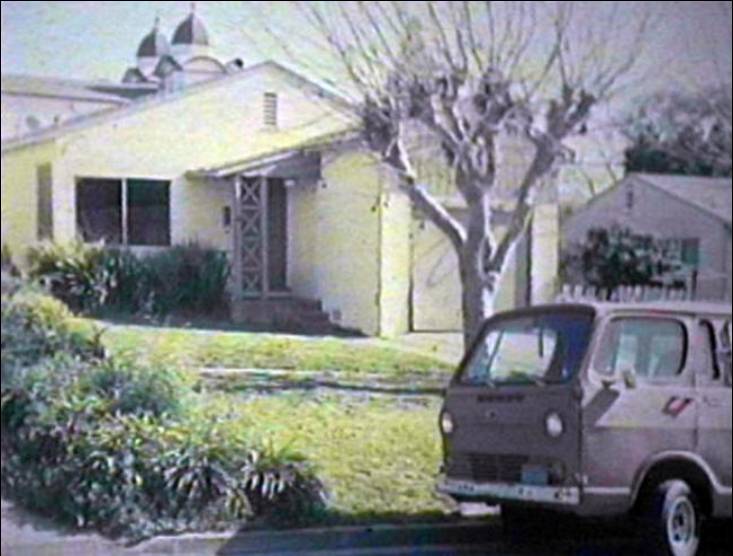
Depending on when you want to start counting, our experimentation got serious in the backyard of this little house in Benicia, California, a couple blocks from the Carquinez Straits. Nowadays, some people like to fantasize about where the fictional Vulcania might have been, or where the NAUTILUS might have been built. In reality, it was right here. J

For the benefit of those of you visiting from another planet, these are the Carquinez Straits. The yellow square shows the area where we are talking about. Steer your Flying Saucer in that direction as you descend. J

The UFO-view from final approach toward the Benicia Marina. The yellow square and dot to the North East of the Marina marks where we lived.
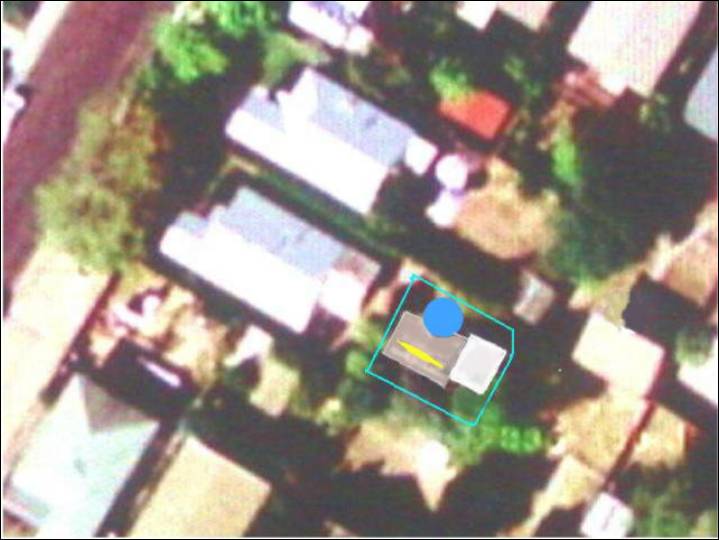
Zooming in even closer, we have an airborne view of the house that became VULCANIA SUBMARINE, taken in 2006. The blue dot is where our testing pool was located. The yellow spindle-shape depicts where the NAUTILUS MINISUB was constructed. Not what you could call “spacious accommodations” by any means.
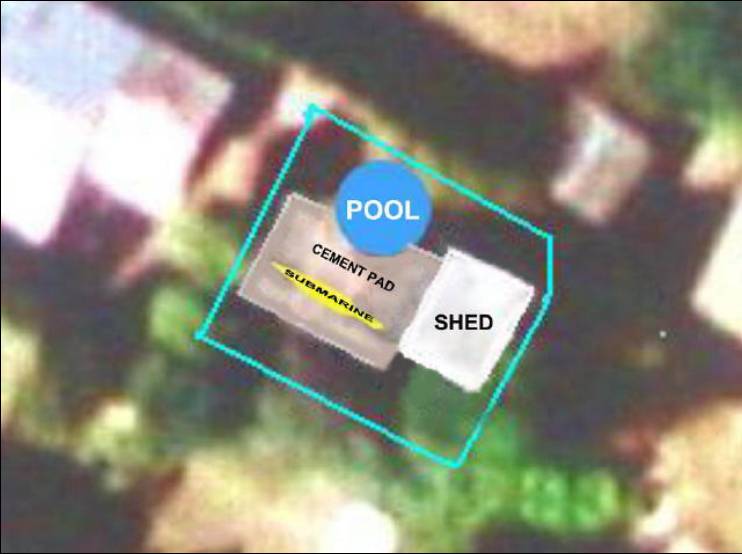
When people called us “backyard submarine builders”, they weren’t kidding. Part of our backyard was framed and enclosed by eight-foot high plywood walls. (Above is a closeup of the layout.) Not many people knew it was there; and those who did often just referred to it with code names like “the Twilight Zone” or “the Sector”. (Sort of like our own little “Area 51”.) Within those walls, interesting experiments, great parties, and just plain fun was the order of the day.
But from the standpoint of an “embattled inventive technologist” (locked-away behind those walls, with no “How-To” Manual or Internet; and with only the local Library as my primary reference) I was pretty-much left to my own devices to teach myself everything I needed to know about submarines.
Accordingly, some of my first experiments proved concepts that were 300 years old. But I didn’t know that at the time; and in any event they helped me discover and understand important fundamentals from a “hands-on” perspective. J

Testing a human-powered swimming machine. It was a total failure. J
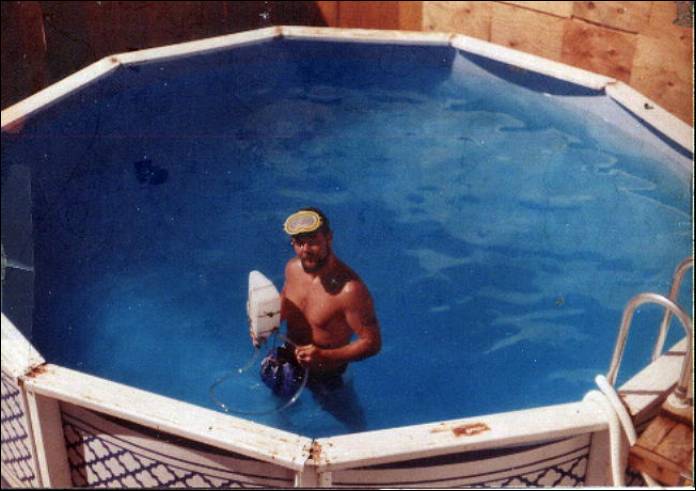
Pat in pool (5’ at deepest point) with experimental homemade re-breather. It worked!!!
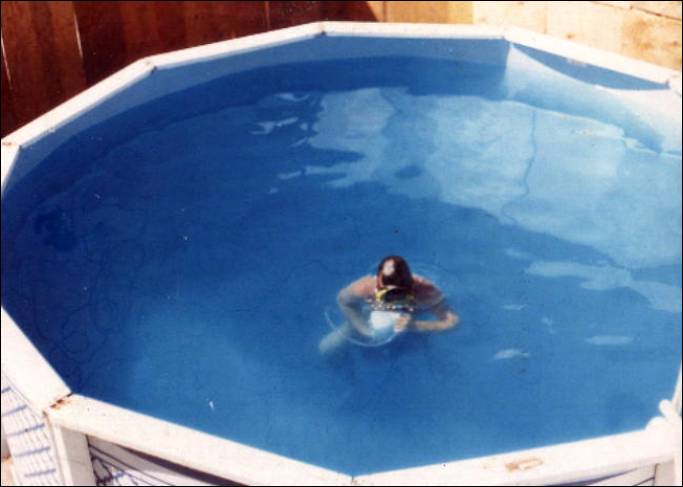
Surfacing after successful re-breather test.

Improved re-breather with pressurized supply.
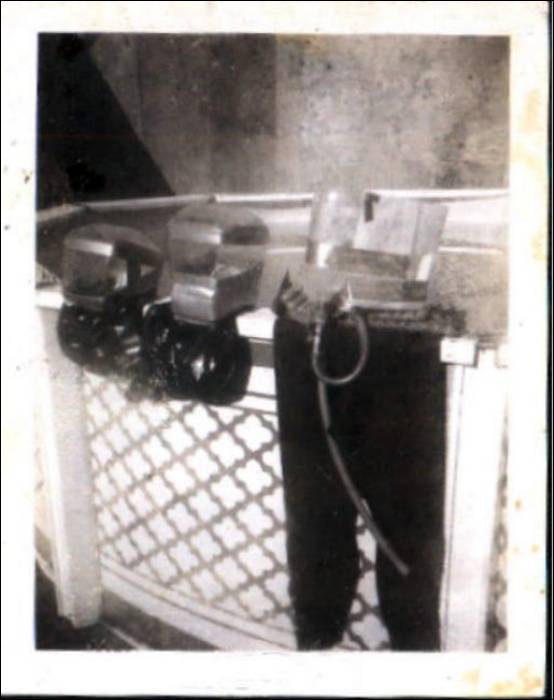
Home-made helmet / re-breather system components.
These devices were crudely fashioned: oftentimes utilizing items we had around the house and adapting them to our purposes. I learned from each failure, but most of what I built worked well enough to prove principles, and lead toward better things.
To some, it might seem laughable now, but remember: back then, we didn’t have the advantage of Internet websites (like this one) disseminating information about underwater technologies. At the time, we were developing that information, and this was part of the process of “figuring it out all on our own” that we had to go through.
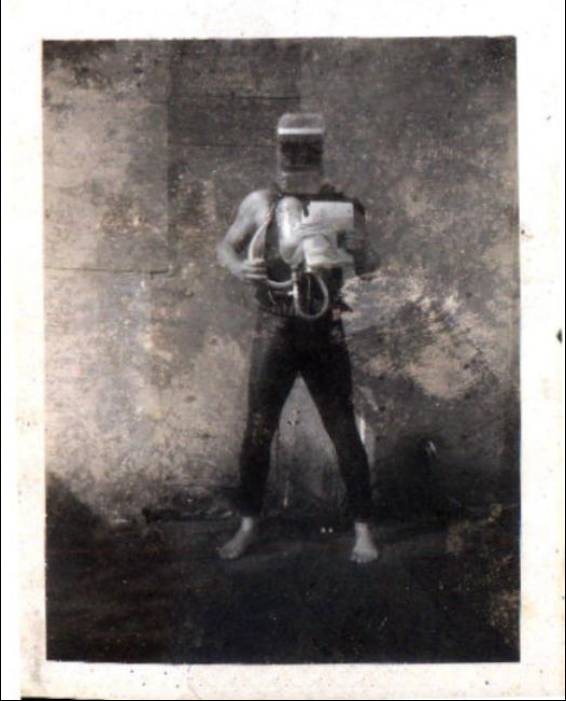
Pat wearing helmet / rebreather system.

Pool-testing a “proof of concept” helmet / rebreather system.
This rig cost about $5.00 to build (the helmet was a discarded plastic ink-pen display from a drug store) and could sustain a man underwater for up to 20 minutes. Back then, everybody who saw and test-dove this rig was pleasantly amazed by it.
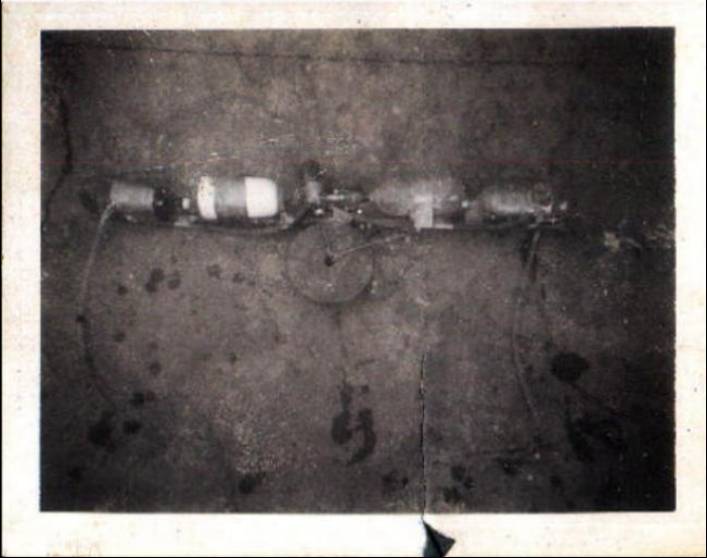
Above is a crude ballast-system test-model for an ambient pressure submarine concept. Plastic bottles, a length of pipe, a barbell weight, and a few tubes and valves. Cheap? Sure! But it worked and we learned from it! J
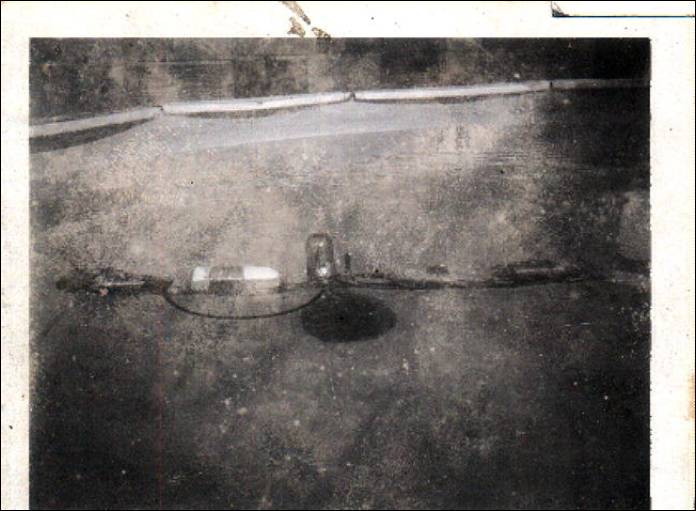
Ballast system model floating in pool. (And my own SIMPLIFIED SUB DESIGN MATH program at work, BTW.)
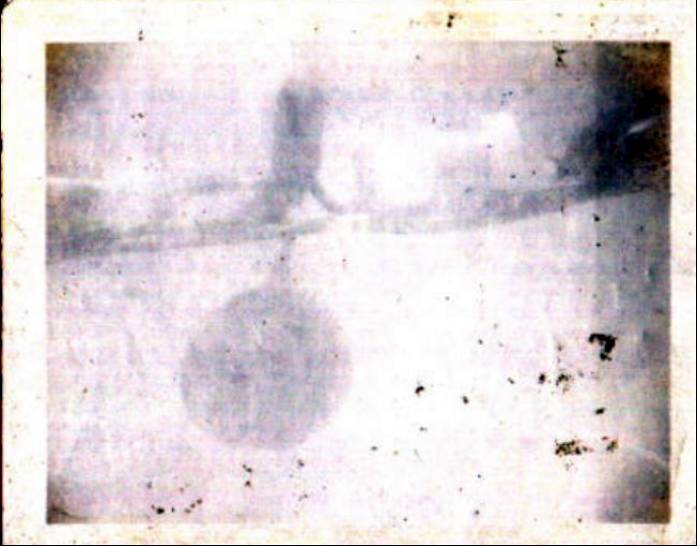
Ballast system test model underwater and functioning correctly. (Photo taken with a Polaroid B&W camera, held upside down in an inverted, clear-plastic canister.) The lessons we learned from this system-test model showed us what works (and what doesn’t); enabled us to avoid design mistakes we’ve seen others make; and led to the hydrobatic ballast system of our NAUTILUS MINISUB.
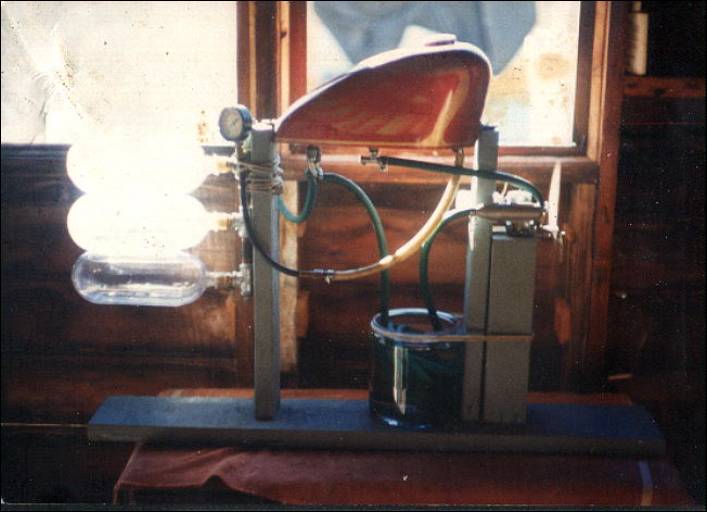
Experimental test model for a “closed circuit” Air Independent Propulsion system: another test model (we tossed together out of things we had laying around the house) that worked well enough to prove the concept.
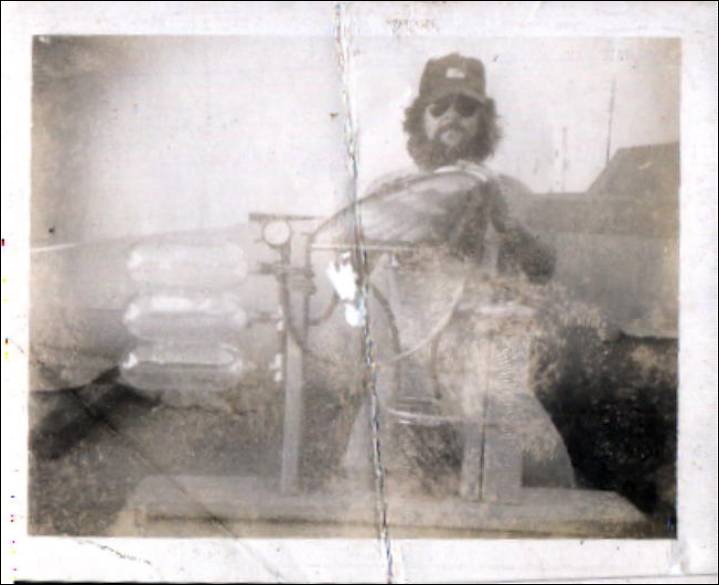
Pat with first AIP system test model in front of HYPERSUB pressure hull mockup.